
TLDR:
Modern dating apps have intensified hookup culture, turning human connection into a “dopamine hit.” This cycle often leads to low-grade dissociation and emotional avoidance. Recognizing the physical signs of burnout and utilizing tools like YouHabits can help you transition from compulsive swiping to authentic, nourishing relationships.
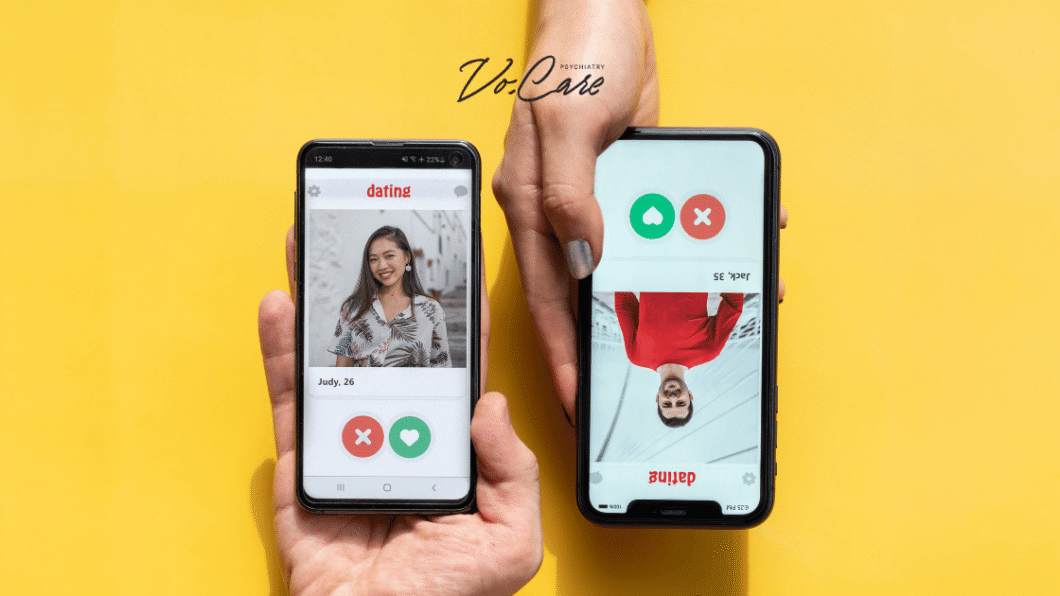
The modern dating landscape often feels like a high-speed treadmill. We swipe, match, and meet, yet many of us leave these encounters feeling more isolated than when we started. At Vo.Care Psychiatry Therapy and Coaching, we look beneath the surface of these digital interactions to ask a critical question: Is the current state of hookup culture actually a collective defense mechanism against true intimacy?
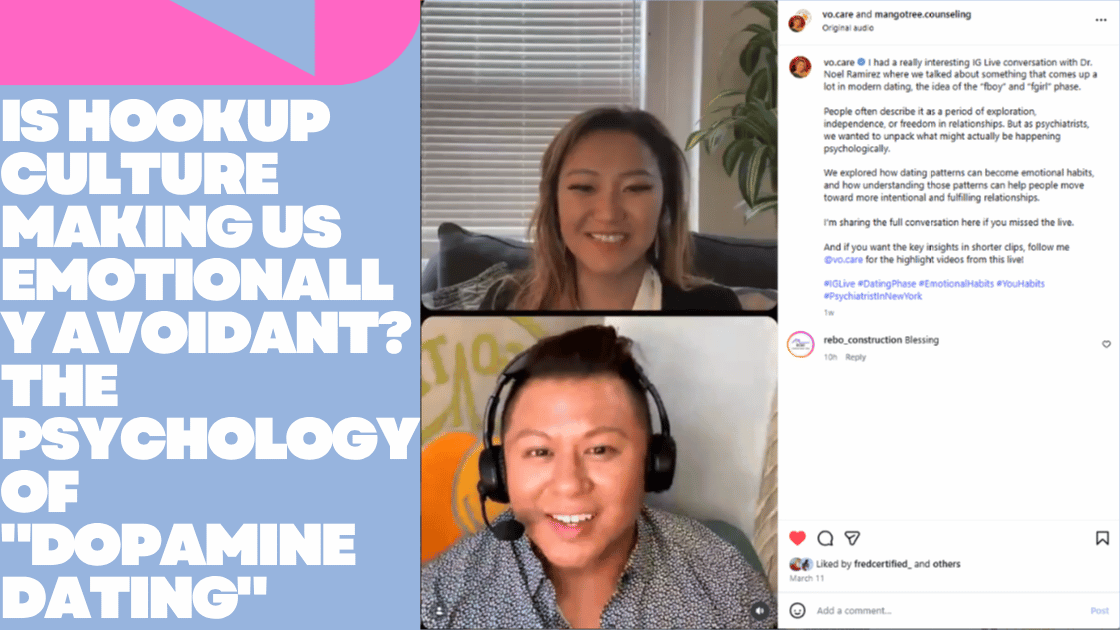
To explore this, Dr. Krysti Vo recently hosted an IG Live with Dr. Noel B. Ramirez (DBH, LCSW), founder of Mango Tree Counseling. Their discussion centered on “stuckness,” sexuality, and how digital habits are reshaping our mental health.
Watch the Replay: Click here to watch the full IG Live and take notes on how to navigate modern intimacy and build resilience.
Defining the Hookup Culture Phenomenon
Understanding the hookup culture meaning requires looking beyond the act itself. A formal hookup culture definition describes a social environment—prevalent in digital spaces and college campuses—that encourages casual sexual encounters without the requirement of emotional intimacy or long-term commitment.
Why is hookup culture so popular?
Psychology suggests it offers the “illusion of intimacy” while stripping away the “risk of vulnerability.” While it is often marketed as a tool for sexual liberation or time-efficiency, it frequently serves as a form of emotional avoidance. We protect ourselves from the potential pain of real connection, but in doing so, we sacrifice the very nourishment that humans need to thrive.
The Digital Vocabulary: "Fucc Bois" and "Fucc Girls"
Dating apps have not only changed how we meet but also how we label one another. In internet culture, the terms “fucc boi” and “fucc girl” describe individuals who navigate the dating scene with intentional emotional unavailability. These roles are characterized by “ghosting” or “breadcrumbing” to maintain power and avoid responsibility. From a psychiatric perspective, this behavior is often a symptom of the “stuckness” Dr. Ramirez treats—a cycle of avoiding the discomfort of being truly seen.
The Digital Vocabulary: "Fucc Bois" and "Fucc Girls"
Research shows that dating apps did not create these behaviors, but they have intensified them. The interface of a dating app is designed to trigger a dopamine hit every time you receive a match. This is the same neurological loop found in gambling.
-
Dopamine Dating – You stop looking for a partner and begin looking for the next notification.
-
The Result – Compulsion replaces presence. When we are driven by this digital “high,” we are not present in our relationships. This has fueled an epidemic of loneliness; we have an intense connection to our screens, but a shallow sense of interconnectedness with other people.
The Link Between Phone Usage and Sense of Self
High usage of your phone often correlates with a lower sense of self. When apps become the primary form of social connection rather than a supplement to it, we enter a state of low-grade dissociation. The screen acts as a buffer, making the person on the other side feel less “real.” Eventually, our bodies begin to signal that something is wrong.
Are you using dating apps the right way?
Our bodies know when we are exhausted or burned out before our minds do. If you feel a sense of dread or “numbness” when talking to new matches, your nervous system is signaling a boundary. You are not “over-reacting”—you are over-extended.
Transform Your Routine with YouHabits
Breaking the cycle of emotional avoidance requires more than just "taking a break" from apps; it requires a shift in daily habits. YouHabits is our platform designed to help you regain control. If your dating app usage has become a compulsion that leaves you feeling drained, YouHabits provides the structure needed to move from mindless swiping to mindful living.
Ready to change your habits? Start building a more grounded, intentional life.
Setting Boundaries for Resilience
Dr. Noel B. Ramirez emphasizes that building resilience in your dating life starts with self-awareness. To move from avoidance to authenticity, consider these shifts:
-
Limit Swipe Time – Treat apps as a bridge to meet in person, not a replacement for social interaction.
-
Practice Presence – If you aren’t “all there” during a conversation, log off and reconnect with yourself.
-
Check Your Intentions – Ask yourself if you are swiping for connection or to escape boredom.

Take the Next Step
Hookup culture is a complex landscape to navigate alone. If you find yourself in a habit you want to correct, or if you want to talk to a professional about “stuckness,” sex-addiction, or building a better sense of self, we are here to help.
Meet the Experts

Dr. Krysti Vo Dr. Krysti Vo is a board-certified psychiatrist specializing in digital mental health and the psychology of habits. As a leader at Vo.Care, she focuses on how technology impacts our neurobiology and interpersonal relationships. Dr. Vo is dedicated to helping patients break compulsive digital cycles to foster genuine emotional well-being.

Dr. Noel B. Ramirez is the Founder and Director of Mango Tree Counseling & Consulting. A Senior Psychotherapist with extensive credentials, he specializes in Asian American Identity, sex-addiction, and sexuality. His work focuses on helping individuals navigate “stuckness” through recovery, resilience, and body positivity, ensuring an integrated approach to healthcare and work-life balance.
Frequently Asked Questions
Hookup culture refers to a social environment that encourages and accepts casual sexual encounters—such as one-night stands or “friends with benefits”—without the expectation of emotional intimacy or long-term commitment. Psychologically, it is often characterized by a shift in social norms where casual sex becomes a developmental milestone or a primary mode of social interaction, particularly in digital and campus settings.
While not everyone in hookup culture is avoidant, the structure of casual dating often rewards emotional detachment. By prioritizing “low-stakes” encounters, individuals can avoid the vulnerability required for deep connection. Over time, this can lead to a habit of emotional avoidance, where a person uses casual sex as a defense mechanism to stay “safe” from potential rejection or the “stuckness” of a serious relationship.
Dopamine dating describes the compulsive use of dating apps to trigger the brain’s reward system. Every swipe, match, and notification releases dopamine, creating a neurological loop similar to gambling. In this cycle, the user often becomes more addicted to the validation of the match than the actual person, leading to a sense of burnout and decreased presence in real-world interactions.
Dating apps didn’t necessarily create hookup culture, but they significantly intensified it by removing “interpersonal friction.” By making potential partners accessible via a screen, apps can de-personalize the experience. This often leads to “low-grade dissociation,” where users treat profiles as disposable options rather than human beings, making it easier to maintain emotional distance.
Common signs of dating app burnout include:
-
Feeling a sense of dread or “numbness” when opening a dating app.
-
“Swiping” mindlessly without any real intent to meet.
-
Physical symptoms like chest tightness or fatigue when engaging in digital “small talk.”
-
A feeling of cynicism or hopelessness about finding genuine connection.
Breaking the cycle starts with mindful habit-shifting. Using tools like YouHabits can help you set boundaries on screen time and refocus on intentional living. Dr. Krysti Vo recommends practicing “presence” by limiting app usage to specific times of day and ensuring that your digital interactions are a bridge to in-person meetings, not a replacement for them.