
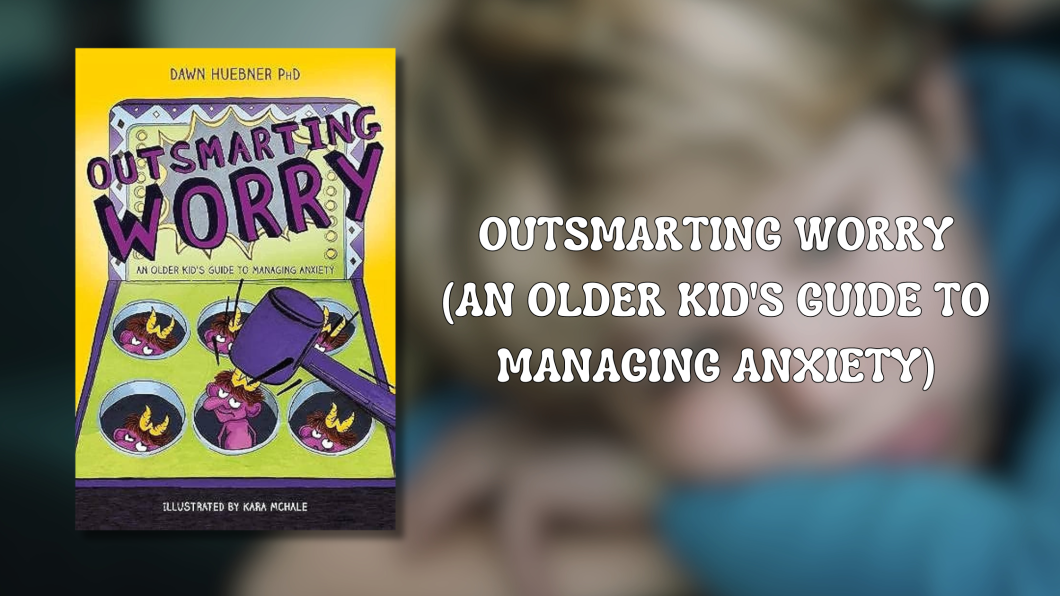
TL;DR: “Outsmarting Worry” is a workbook written for kids ages 9 to 13 who deal with anxiety. Dawn Huebner, a clinical psychologist, teaches kids to treat worry as something separate from themselves that they can learn to manage. The book uses techniques drawn from cognitive behavioral therapy, including naming the worry, testing it against evidence, and practicing calming exercises. Parents can read it alongside their child to open up conversations about anxiety and build coping skills together.
Anxiety in kids this age often shows up as a stomachache before school, a meltdown over a test, or a sudden refusal to go to a sleepover. Kids can feel the anxiety in their body long before they have words for what’s happening in their mind.
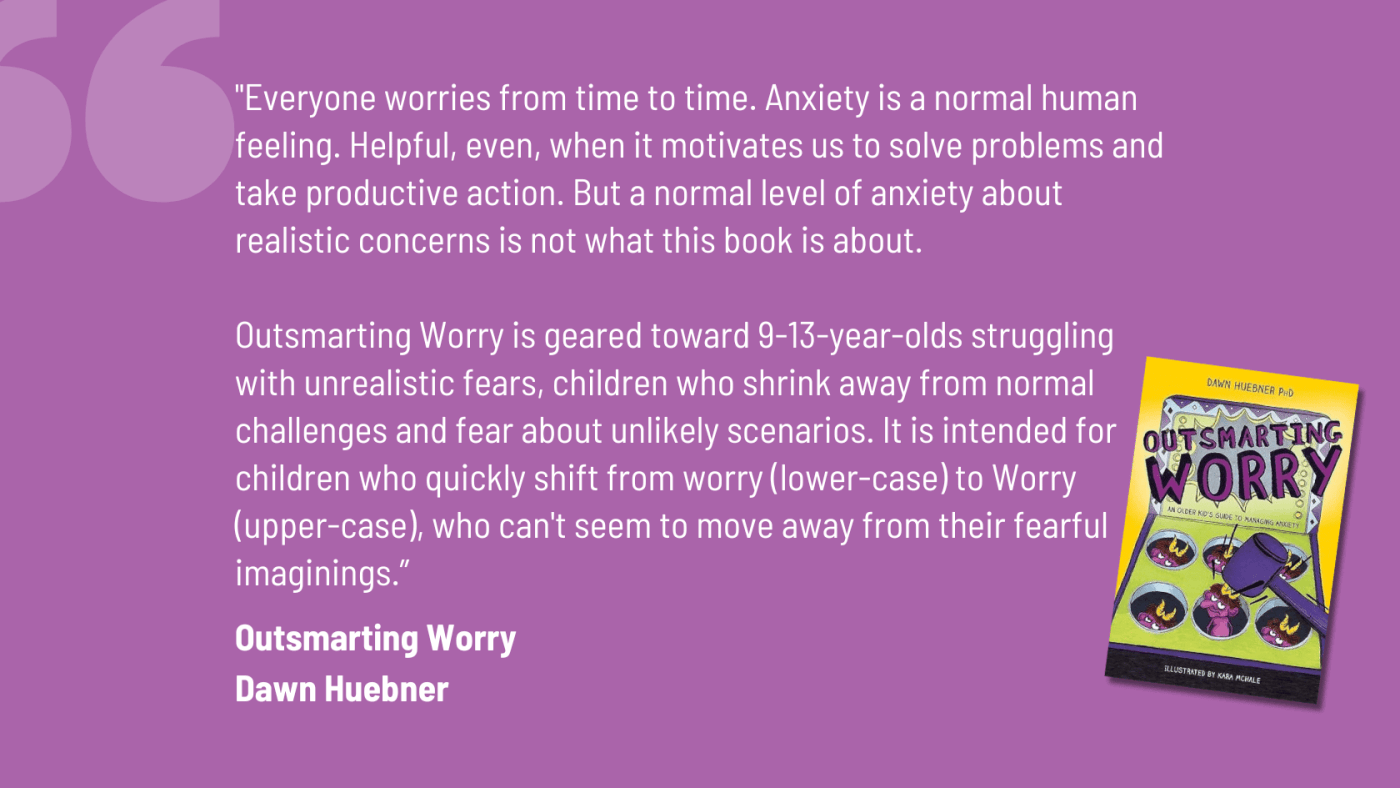
“Outsmarting Worry” gives kids ages 9 to 13 a way to name what they’re feeling and a set of concrete steps to respond to it. Dawn Huebner wrote it for kids who are old enough to reflect on their own thinking but still need direct, structured guidance to do it.
What the Book Teaches Kids to Do
The book walks kids through recognizing worry as a specific, identifiable pattern rather than a vague feeling that takes over. Each chapter introduces one skill: catching a worry thought, checking whether it’s realistic, and choosing a response instead of avoiding the situation.
Huebner uses short chapters, checklists, and space for kids to write or draw their own worries. A ninth grader nervous about a presentation and a fourth grader afraid of the dark can both use the same framework, adjusted to their own worry.
How These Techniques Actually Work
Cognitive behavioral therapy, the approach the book is built on, works by changing the relationship between a thought and the body’s response to it.
When a child treats a worry as fact, the brain’s threat detection system reacts as if there’s real danger. Heart rate goes up, breathing gets shallow, and the child’s ability to think clearly drops. This is a normal stress response, not a flaw in the child.
The book’s method interrupts that cycle in two ways. First, naming and externalizing the worry, treating it as something separate from the child, creates enough distance for the child to examine the thought instead of reacting to it automatically. Second, checking a worry against real evidence gives the brain new information, which over repeated practice weakens the automatic alarm response.
Breathing exercises included in the book work through a similar path. Slow, deliberate breathing activates the parasympathetic nervous system, the body’s built in calming mechanism, which lowers heart rate and signals to the brain that the immediate danger has passed.
None of this happens after one read. Like any skill, it takes repetition for a child’s brain to build a new default response to worry.
How Parents Can Use This Book With Their Child
If you’re a parent, you might consider getting this book so you can better understand and support your child through their struggles with anxiety. Here’s how:
1. Understanding Anxiety
Reading the book gives you language for anxiety patterns you may have only seen from the outside, like avoidance, irritability, or physical complaints.
2. Open Communication
Use a chapter as a starting point rather than asking your child to explain their anxiety cold. A worksheet or example gives them something concrete to respond to.
3. Learning Together
Going through chapters side by side lets you model the same thought checking and breathing techniques your child is learning, rather than just assigning the book as homework.
4. Practicing Techniques
A technique practiced only during a crisis is harder to access in the moment. Bringing breathing exercises or worry checks into ordinary moments makes them easier to reach when anxiety spikes.
5. Providing Support
Notice when your child tries a technique, even if the worry doesn’t fully go away. Managing anxiety is a skill built through repetition, not a switch that flips off.
About the Author
Dawn Huebner, PhD, is a clinical psychologist who has spent her career treating anxious children and their families. She’s the author of several “What to Do” guides for kids, including the award winning “What to Do When You Worry Too Much,” known for translating clinical techniques into language kids can actually use.
Signs This Book Could Help Your Child
Some kids show anxiety loudly. Others hide it well enough that parents miss it until it shows up somewhere else, a stomachache, a sudden refusal, a meltdown that seems to come from nowhere.
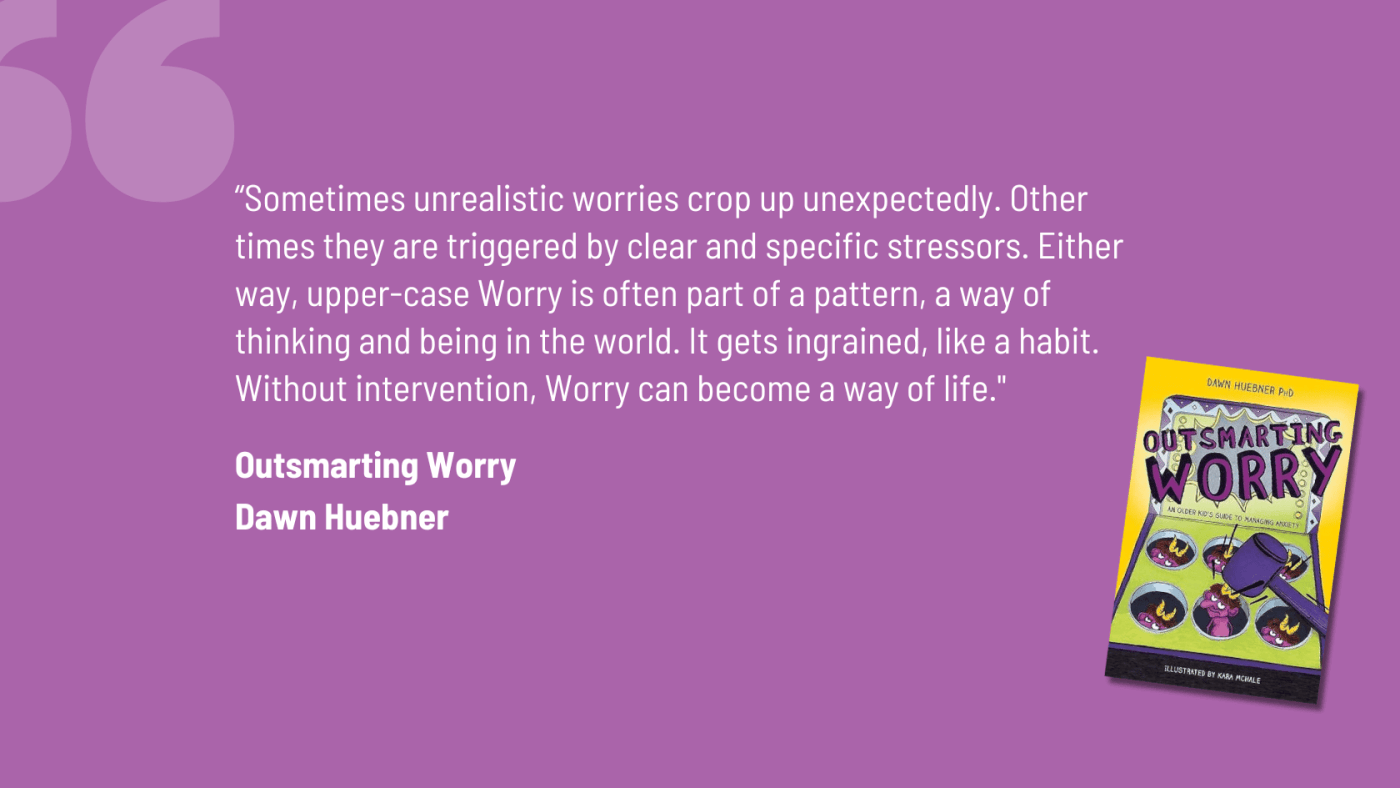
“Outsmarting Worry” is aimed at kids whose anxiety has settled into a pattern. Here’s what that pattern often looks like.
1. Physical complaints with no clear cause
Frequent stomachaches, headaches, or fatigue a pediatrician can’t explain physically are often the body registering anxiety before a child has the words for it.
2. Avoidance that keeps growing
A child skips one sleepover, then birthday parties, then starts turning down invitations before they’re even extended. The book names this pattern directly. Avoidance feels like relief in the moment, but it teaches the brain the situation really was dangerous, which makes the next round of worry stronger.
3. Safety behaviors that quietly shrink their world
Needing a parent nearby at all times, refusing to answer the phone, checking something repeatedly before feeling okay to move on. These behaviors offer short term comfort but work the same way avoidance does, reinforcing the worry cycle instead of breaking it.
4. Worry that outpaces the actual risk
A kid convinced an ordinary test will end in failure, or that a small disagreement means a friendship is over, is experiencing what the book calls a false alarm, the brain treating a normal situation like an emergency.
5. Meltdowns that seem to come out of nowhere
Sudden anger, crying, or shutting down, especially around transitions like school mornings or new situations, is often anxiety building up quietly and then spilling over once it’s too much to manage internally.
6. Anxiety already on a therapist’s radar
If your child is in therapy, this book works well as a between session tool, reinforcing skills a clinician is already teaching in a format your child can revisit on their own.
This book builds skills. It doesn’t replace treatment if your child’s anxiety is significantly disrupting school, friendships, or daily life. But if several of these patterns sound familiar, it’s worth adding to the conversation, whether alongside therapy or as an early, lower pressure step.
Need More Support?
If your child’s anxiety feels bigger than a book can address, or you want a professional read on what’s going on, book a free 15 minute discovery call by sending us a message. You can also add “Outsmarting Worry” to your cart to start using it with your child today.
Frequently Asked Questions
The book is designed for kids ages 9 to 13, though the concepts can flex slightly younger or older depending on the child’s reading level and maturity.
Yes. It draws on cognitive behavioral therapy, particularly techniques for identifying anxious thoughts, checking them against evidence, and building calming skills like breathing exercises.
No. It’s a skill building tool that works well alongside therapy or as an early step for milder anxiety. If your child’s anxiety is interfering with school, friendships, or daily functioning, a professional evaluation is worth pursuing.
There’s no fixed timeline. Anxiety coping skills build with repeated practice, similar to any new habit. Some families notice small shifts within a few weeks of consistent use.
Either can work, but reading it together tends to open up more conversation and lets you reinforce the techniques in daily life, not just during reading time.